Artificial Intelligence is no longer a future investment — it is a present-day leadership decision.
Across private enterprises, small and medium-sized businesses (SMBs), and government MDAs, AI adoption is accelerating. Yet many organizations are still unclear about strategy, governance, and measurable outcomes.
In a recent webinar, “AI Beyond the Hype: What Businesses Must Get Right to Grow,” AI Strategy Consultant Bulama Yusuf joined industry leaders to discuss what truly separates AI experimentation from AI-driven growth.
The message was clear:
AI does not create growth. Strategy does.
The Real Question: What Does Growth Mean for Your Organization?
Before investing in AI tools, leaders must answer a more fundamental question:
What does growth mean for us?
For:
- SMBs, it may mean improved cash flow, operational efficiency, and customer retention.
- Enterprises, it could involve scaling operations, reducing cost-to-serve, or enhancing service personalization.
- MDAs, growth may translate into improved public service delivery, transparency, compliance, and efficiency.
Without clarity on desired outcomes, AI initiatives risk becoming disconnected pilot projects with no measurable return.
AI must serve clearly defined institutional objectives — not curiosity or competitive pressure.
Why Most AI Initiatives Stall at the Pilot Stage
A striking insight from the discussion was that only a small fraction of organizations successfully scale AI beyond pilot phases.
Why?
Because AI is often treated as:
- A plug-and-play solution
- A cost-cutting shortcut
- A replacement for process discipline
In reality, AI implementation requires:
- Clean and structured data
- Defined workflows
- Governance and oversight mechanisms
- Change management across teams
AI behaves differently from traditional software. It learns, adapts, and sometimes produces unpredictable outputs. Without governance frameworks, organizations expose themselves to operational and reputational risk.
For MDAs especially, compliance with data protection regulations and public accountability standards makes governance non-negotiable.
Back-Office First: Where AI Delivers Immediate Value
One of the most practical insights from the webinar was this:
AI delivers faster wins in back-office operations than in customer-facing functions.
For example:
- Automating document processing
- Enhancing internal reporting
- Improving procurement workflows
- Optimizing data analysis
- Supporting HR and administrative processes
Customer-facing AI, such as automated support or underwriting systems, introduces higher risks — including bias, trust erosion, and reputational damage — if not carefully governed.
Organizations should start where AI improves internal efficiency before extending into public or customer interactions.
Viewing Your Organization as a “Data Machine”
Bulama introduced what he calls the “Circuit Framework” — a way of thinking about organizations as data ecosystems.
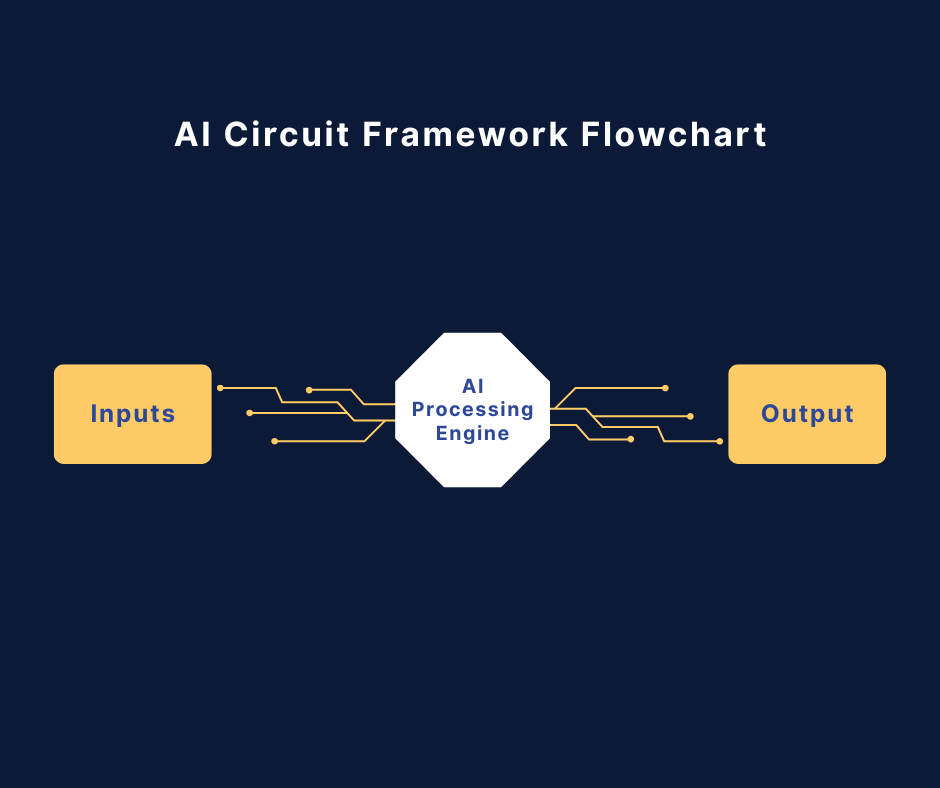
Every organization runs on:
- Inputs (data collection)
- Processing (decision-making workflows)
- Outputs (services, products, or public services)
AI becomes effective when leaders:
- Map their data flows
- Identify inefficiencies
- Introduce AI at precise friction points
Rather than asking, “Where can we use AI?” leaders should ask:
“Where is data slowing us down, and how can AI improve that flow?”
This reframing prevents random AI experimentation and aligns deployment with operational priorities.
Governance: The Most Overlooked AI Investment
AI conversations often focus on tools, but governance determines sustainability.
For SMBs and Enterprises, this includes:
- Defining decision rights for AI outputs
- Establishing approval workflows
- Setting performance thresholds
- Monitoring bias and error rates
For MDAs, it extends to:
- Compliance with national data protection regulations
- Transparency in automated decision-making
- Public accountability standards
- Secure infrastructure (on-premise or compliant cloud environments)
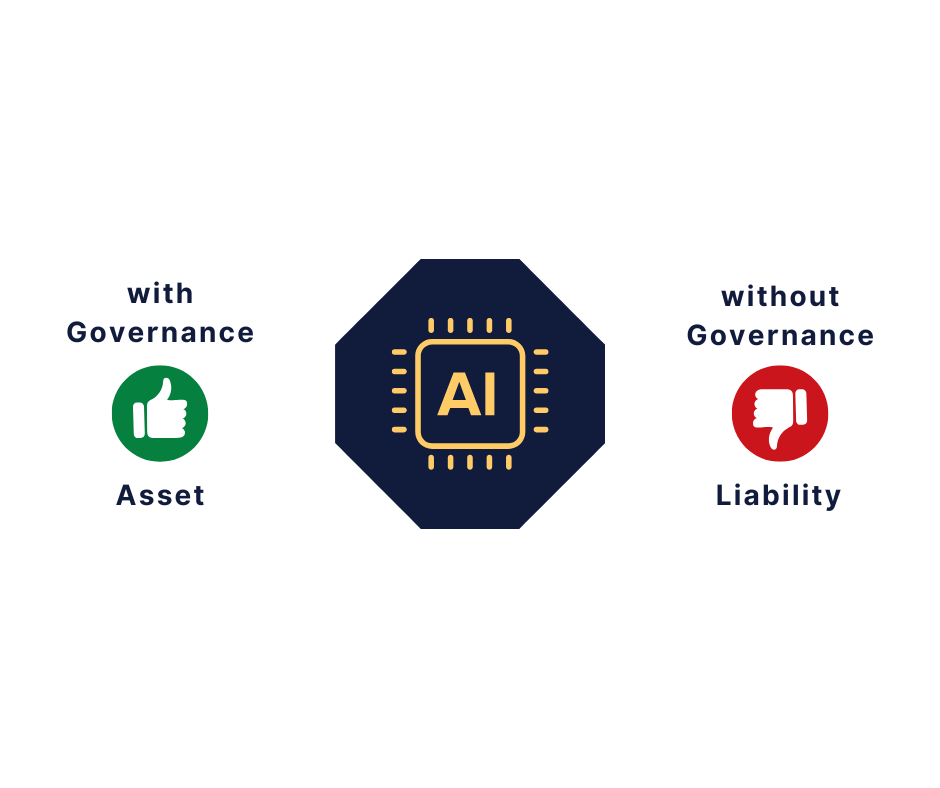
With governance, AI becomes an institutional asset.
Without governance, AI becomes a liability.
AI and Workforce Strategy: Replace or Augment?
AI inevitably affects jobs — but not always in the way leaders assume.
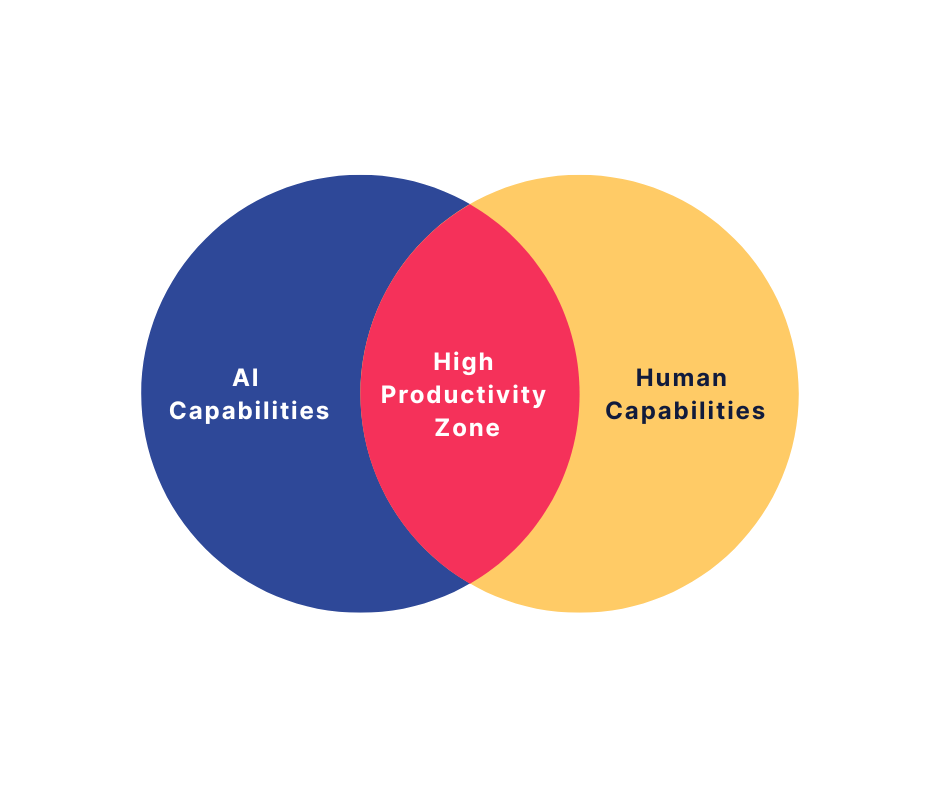
AI can:
- Automate repetitive tasks
- Augment professional decision-making
- Improve analytical depth
- Enhance productivity
The critical decision for leaders is not whether AI replaces staff — but how to upskill teams to work effectively alongside AI.
Organizations that invest in workforce capability gain:
- Faster adoption
- Lower resistance
- Higher productivity
- Sustainable innovation culture
Those that neglect upskilling risk stalled initiatives and cultural backlash.
The Risk Factor: Bias, Control, and Public Trust
Deploying AI in sensitive areas — such as KYC verification, credit underwriting, or regulatory decisions — carries real risks.
Poorly governed AI systems can:
- Produce biased outcomes
- Alienate customers or citizens
- Trigger compliance violations
- Damage institutional credibility
AI must operate within clearly defined ethical and operational boundaries.
This is particularly critical for MDAs, where public trust is foundational.
Moving Beyond the Hype
AI is not a magic wand.
It will not:
- Fix broken processes
- Compensate for unclear strategy
- Replace leadership judgment
- Remove the need for governance
However, when aligned with strategy, structured by governance, and supported by workforce capability, AI becomes a powerful enabler of:
- Operational efficiency
- Cost optimization
- Scalable service delivery
- Data-driven decision-making
- Sustainable growth
Building AI Capability for Long-Term Growth
AI transformation is not just a technology initiative — it is a capability initiative.
Organizations that succeed treat AI as:
- A strategic lever
- A governance challenge
- A data discipline
- A workforce development opportunity
Continuous learning becomes essential.
Platforms like Distinction support professionals, teams, and public sector leaders in building practical AI, digital, and strategic capabilities required in today’s knowledge economy.
👉 Explore learning paths for professionals and teams:
https://distinction.app/learners
Final Thought for Leaders
The organizations that will win in the AI era are not those who adopt the fastest — but those who adopt the most intentionally.
AI does not drive growth on its own.
Clear strategy, disciplined execution, governance, and skilled people do.
The question is not whether your organization will use AI.
The question is whether you will use it strategically — or reactively.